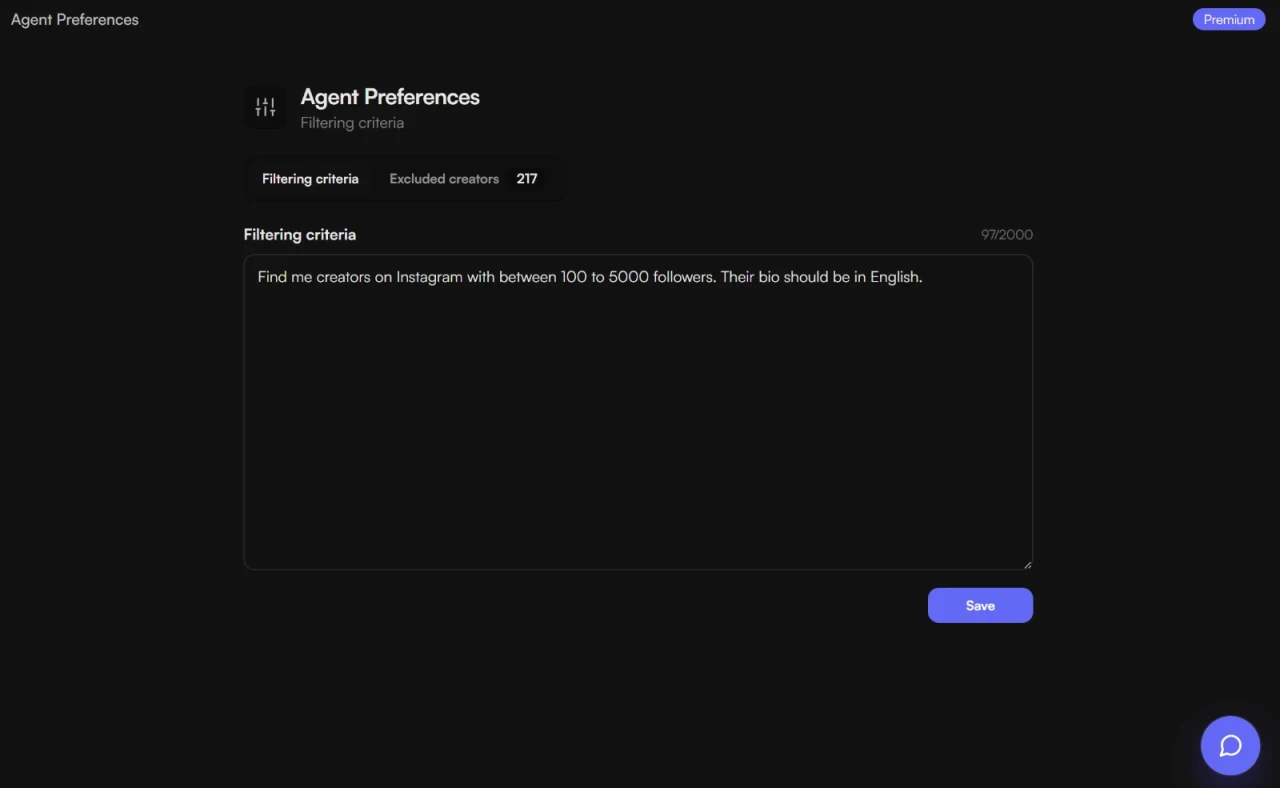
UGC World asked UGC Agent for 1,000 Instagram creators with 100 to 5,000 followers and English bios. The agency reported that the list was built in about ten minutes and sent without manual cleanup. Roughly 12 days into outreach, the campaign was about 56% through the list, with no reported bounces, an approximately 20% reply rate, and 147 positive replies.
A useful UGC creator sourcing case study should show the original brief, the size of the list, the stage of outreach, and the difference between total replies and positive replies. UGC World supplied that context after using UGC Agent for a live agency campaign.
The agency runs paid UGC campaigns for ecommerce and app brands and needs a large creator rotation. In the original July 20 announcement, founder and CEO Alexander Kunn described the prompt, the ten-minute list build, zero reported bounces, and 147 positive replies while the campaign was still running. This article explains what that result supports and where the evidence stops.
What did UGC World source with one prompt?
UGC World requested 1,000 Instagram creators with 100 to 5,000 followers and English bios. The agency reported that UGC Agent returned the list in about ten minutes and that the team used the list as delivered for its outreach campaign.
The request was intentionally simple. It specified the platform, a follower range, a language signal, and a result count. Those criteria gave the search a clear boundary without turning the prompt into a long form.
UGC World needed the volume because its existing creator community could only stretch so far across client campaigns. A roster is useful for repeat relationships, but an agency eventually needs new candidates when briefs, regions, categories, and schedules change.
The list build was the first stage, not the finished campaign. UGC World still owned the sending setup, creator communication, qualification, negotiation, onboarding, brief, production, and client delivery.
The brief behind the 1,000-creator list
Instagram and a defined follower range
The prompt focused on Instagram creators between 100 and 5,000 followers. For commissioned UGC, follower count is not a proxy for production quality. In this campaign it functioned as a practical search boundary for the kind of small creator profile the agency wanted to contact.
An English-bio requirement
The English-bio criterion was a searchable language signal, not proof of fluency, location, or campaign eligibility. Those details still need profile review and direct confirmation.
A better brief adds only the constraints that change the decision. Product category, region, customer persona, content format, portfolio evidence, and contact requirements can matter more than follower count for another campaign. The UGC campaign brief generator helps turn those inputs into a usable first pass.
What happened during the first 12 days of outreach
At the time of UGC World's report, the outreach campaign had run for about 12 days and was approximately 56% through the 1,000-lead list. The agency reported no bounces, a reply rate of about 20%, and 147 replies marked positive.
The timing prevents a common reporting mistake. These numbers described a campaign in progress, not a closed final report. More of the list remained to be contacted, and later outcomes could change the totals and rates.
Alexander also reported that 86.98% of replies were marked positive. UGC World's classification is useful because it separates general response from interest. The reported 147 positive replies are the clearest signal that the list created real campaign conversations.
Zero reported bounces supported the quality of the contact data in this send. It did not prove that every future address would remain valid or that every message reached the primary inbox.
How to interpret 147 positive replies
The 147 positive replies show that a meaningful group of creators responded favorably to a paid opportunity. They do not equal 147 booked creators, signed contracts, delivered assets, or campaign wins. Each reply still had to move through the agency's commercial and production process.
UGC World reported that it was already placing 10% to 20% of the positive replies into active campaigns at the time of the customer interview. Treat that as the agency's point-in-time report, not a conversion guarantee.
Paid creator outreach also has different economics from cold sales outreach. The recipient is being offered compensated work. The message, brand, rate, product, and creator's current availability all influence the response.
For your own program, keep the stages explicit: sourced, reviewed, contacted, delivered, replied, positive, quoted, contracted, producing, delivered, and approved. A long list becomes manageable when every operator knows what each status means.
What agency teams can take from the result
The agency lesson is not to chase the largest possible list. It is to make discovery repeatable enough that client work is not capped by one closed roster. Keep the brief specific, retain the evidence, and hand qualified records into a measured outreach process.
Agencies need sourcing systems that can adapt across clients. A skincare brief, an app demo, and a travel campaign require different creators even when the same team manages all three. Saved criteria and exclusions help, but every client brief still needs a fresh review.
Use the agency creator sourcing guide to define the handoff, then apply the creator screening checklist before contacting a large list. This protects the sender and prevents volume from replacing judgment.
Read the complete UGC World customer story for the attributed interview, campaign context, and video testimonial. It keeps the customer-reported facts tied to their original source.
How agencies can reproduce the method, not the result
An agency can reproduce the operating method by writing a bounded brief, reviewing the first returned profiles, preserving evidence, sending through one measured campaign, and classifying outcomes. It cannot reproduce a customer's result on command.
Begin with one client and one content job. Write the persona, platform, region, follower range only when it matters, recent content evidence, contact requirement, and clear exclusions. Add a result target based on how many profiles the team can review, not how large a list looks in a report.
Inspect an early sample before requesting the full volume. Review twenty to fifty profiles and identify the most common mismatches. If the search is returning influencers who sell reach when the brief needs commissioned content, refine the creator language and evidence requirements before scaling.
Keep every source URL and review date with the record. Profiles change, posts disappear, bios are rewritten, and contact routes move. Evidence lets another teammate understand why the creator originally passed and what needs to be confirmed before outreach.
Send one cohort through one campaign with stable copy and offer terms. Use a destination campaign that records delivery, bounce, reply, and opt-out events. Classify replies by stage, then send the positive group into a separate commercial queue for brief, quote, rights, and availability review.
Close the loop after the campaign. Add declined, wrong-contact, bounced, duplicate, and do-not-contact creators to the appropriate exclusions. Save promising creators even when the timing was wrong. Feed those outcomes into the next brief instead of treating every sourcing run as a clean slate.
This process can reduce ambiguity, but it does not guarantee zero bounces or 147 positive replies. The reproducible asset is the workflow: clear criteria, reviewable evidence, measured outreach, explicit stages, and a better next search.
Give the campaign team a service-level target for each handoff. Decide how quickly new profiles are reviewed, positive replies receive an answer, quotes reach the client, and unavailable creators are closed or rescheduled. Fast sourcing loses value when an interested creator waits several days for basic campaign details.
Audit a small sample after the send. Compare the brief with the profiles contacted, inspect the evidence that supported selection, and check whether the outreach matched the promised opportunity. This review catches criteria drift and gives the agency concrete changes for the next client search without pretending one campaign supplies a universal playbook.
Conclusion
UGC World's campaign shows what can happen when a clear sourcing prompt feeds a real outreach operation: 1,000 creator leads, zero reported bounces, and 147 positive replies while the campaign was still in progress. The result is useful because the stage and limits are visible. Agencies still need human review, outreach, scope, rights, and production management. Read the full UGC World story, or Start free with a real client brief.
Frequently asked questions
What prompt did UGC World use?
UGC World asked for 1,000 Instagram creators with 100 to 5,000 followers and English bios. The prompt set a platform, follower range, language signal, and result count.
How long did the list take to build?
UGC World founder Alexander Kunn reported that UGC Agent produced the 1,000-lead list in about ten minutes. That is a customer-reported result from this specific request.
Did UGC World report any bounced emails?
The agency reported zero bounces at the time of the interview. The campaign was about 56% through the list, so the statement describes that point in the send.
Were all 147 positive replies booked into campaigns?
No. Positive replies indicate favorable responses, not completed bookings. UGC World reported that 10% to 20% of positive replies were already being placed into active campaigns at that time.
Can another agency expect the same result?
No result is guaranteed. Creator fit, the paid opportunity, category, compensation, sender setup, copy, timing, region, and follow-up can all change reply and booking outcomes.